Spain has always held a strong appeal for remote workers, travelers, and digital nomads. The country offers numerous attractive features for expats, including affordable living, beautiful beaches, and foreigner-friendly cities. While these factors make Spain an enticing option, the reality of relocating can be much more complicated. For those contemplating a move to Spain from a non-EU country, the notorious visa requirement always comes into play.

The process of navigating visas can feel overwhelming. However, Spain has several options for foreigners who want to live, work, or study. No matter what your aim, there are choices for you. Here we’ve compiled an overview of how to get a visa in Spain. Check out the most popular visa types and get ready to step into your new life under the Spanish sun!


Spain Digital Nomad Visa

How to get a visa in Spain 1

After much anticipation, Spain has recently launched a digital nomad visa. This brand new visa allows foreigners who meet certain specifications to live and work in Spain for up to 5 years. Spain joins the ranks of other countries like Portugal, Greece, Italy, and Croatia in offering such visas, which aim to attract international talent and innovation.

The Spain digital nomad visa is open to all non-EU individuals who work remotely for a non-Spanish company. To qualify for the visa, there are several basic requirements. First, applicants must have a history of at least 3 months working with their respective company. The company itself must also have an operational history of at least one year. The job role must be completely remote, and the applicant must demonstrate sufficient qualifications or expertise in their respective field. 

One of the crucial aspects of the digital nomad visa is that the applicant must have social security coverage from their country of origin, which can be difficult to obtain. For countries without a social security agreement with Spain, the applicant’s company will need to register and pay into the Spanish social security system. 

If you’re planning to work as a digital nomad in Spain, be sure to check out our Urban Campus Coliving Spaces. At Urban Campus, you will be connected with other digital nomads and freelancers from all over the world.


Spain Work Visa
How to get a visa in Spain 2

Spain’s work visa is one of the most traditional visa types, allowing you to live and work in Spain through the sponsorship of your employer. To acquire a traditional Spanish work visa, the first step is securing a job offer. This will be the main component of your application. The company does not have to be Spanish, but your job position must require your presence in Spain.

The company sponsoring you will need to provide details and documentation about their operations and financial status, and you will also be required to demonstrate your qualifications and expertise. This could include documents like university degrees, certificates, and letters from previous employers. 

The traditional work visa additionally requires some fundamental documents necessary for almost all visa applications. Typically, this includes background checks with stamps and seals, medical certificates and passport scans. The notable advantage of Spain’s traditional work visa is that it allows you to seamlessly integrate into the country’s workforce, and it can be easily renewed year after year.


Spain Student Visa

How to get a visa in Spain 5

The Spain student visa can be obtained for various educational pursuits, including university studies, exchange programs, and research endeavors. The student visa has a straightforward application process and also allows you to work up to 30 hours a week. You do not need to attend a traditional university to obtain a student visa, as there are a wide variety of programs and institutions that offer them. It is important to note that you need to be accepted by a program or educational institution before you apply for the visa. 

The student visa remains valid throughout the duration of your study program. If you’re eyeing opportunities to work in Spain, this visa can be a great start. You’ll be able to establish professional contacts in Spain while utilizing the 30 hour student work authorization. Be sure to obtain a certificate of completion at the end of your course, which will be a key requirement if you plan on applying for another visa in the future.


Spain Self-Employed Visa

Do you naturally have an entrepreneurial drive? If that’s the case, considering the self-employment visa might be a smart move. To become a self-employed individual in Spain, you’ll need to show your relevant qualifications, have a solid business plan approved by a government-endorsed organization, and demonstrate your initial investment and investment income for your business. If you have a history of freelancing or self-employment, it will surely make the application easier.  

Once your visa is approved, you’ll need to register as a self-employed person (autónomo) in Spain. This forms the basis for all your business activities. While the process of getting a self-employment visa is more complex, it’s worth it because you will have the freedom to work for yourself and run your business independently.


Fast-Track & Golden Visas
How to get a visa in Spain 6

For those lucky individuals who meet stringent criteria, expedited visas are an option. The most common fast-track route is reserved for highly qualified professionals who earn notably high salaries and present exceptional qualifications. Similar to the traditional work permit, you will need a job offer from a company to apply for this visa. If your salary is above the specified threshold, this visa could be an option for you. The approval process for highly qualified professionals is swift and normally involves very little waiting time. 

We would be remiss not to mention the well-known “golden visa”, which is an expedited visa obtained through lofty investment avenues. This includes actions like buying €500,000 of Spanish property or investing €1 million into a Spanish bank. While the golden visa is not a realistic possibility for most people, it certainly is an effective way to obtain a fast-tracked visa.


The Visa Process

Embarking on the visa journey is an exhilarating step towards a new adventure. 

Conventionally, most visa applications are done through an embassy or consulate in your country of origin. However, sometimes you can enter Spain on a tourist visa and initiate your application from inside the country. We highly recommend seeking the guidance of a legal professional, as the requirements are complex and ever-changing. With the right information and support, you can seize the visa process and embark on your new life in Spain. 


Photo Credits: 

  • All photos used through Canva Free Media License
Everything to know about Valencia, Spain

Rich history, time-honored traditions, breathtaking nature, and near perfect year-round temperatures are just a snapshot of what life is like in Valencia. As the third largest city in Spain, Valencia makes up a crucial part of the Spanish landscape. The charming city is known for its long history of thriving citrus agriculture, renowned ceramics, and silk trade. 

Nowadays, Valencia continues to grow as a popular destination for expats, freelancers, and young professionals who are drawn by its luscious beaches and top-rated quality of life. Not to mention, it’s the location of our new Urban Campus Ayora, Valencia coliving space.

Sounds appealing, right? 

We agree. Below we’ve assembled a guide with everything to know about Valencia, Spain.


Mastering a Paella Recipe is a MUST

Everything to know about Valencia, Spain 3

Did you know that Valencia is the birthplace of Paella? 

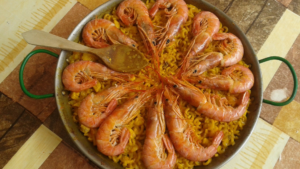
Paella is one of the most famous rice-based dishes in the entire world. Considered a staple of Spanish cuisine, Paella is believed to have originated amongst rice farmers in the Albufera region of the Valencian Community. Although Paella is typically regarded as a seafood dish, the original recipe used wild field animals like chicken, rabbit, snail, and duck. 

Valencian Paella is still cooked with these traditional ingredients and is heralded as the most authentic version of the dish in all of Spain. You will find many Paella pans, or “paelleras”, sold in shops on every corner of the city. If you prefer to leave the cooking to the experts, there is no shortage of incredible Paella restaurants to try. Restaurante Canela and Casa Carmela consistently rank as two of the most popular.


Prepare your Sunscreen and Hiking Shoes

Everything to know about Valencia, Spain 4

The Valencia Region has an abundance of stunning mountains, hiking trails and natural getaways. Don’t worry if you don’t have personal transportation to take you outside the city, as there are plenty of hiking and nature groups that organize transportation to nearby destinations every weekend. 

Montanejos, roughly one-hour from Valencia by car, is famous for crystal clear hot springs and sparkling waterfalls. Here you can explore the ruins of 13th century Arabic baths and even swim in the water of the Fuente de los Baños. According to legend, this water has special healing properties that promote eternal youthfulness and radiant beauty. Montanejos is also a great place for rafting, hiking and sunbathing. 

Other great day trips from Valencia city: 

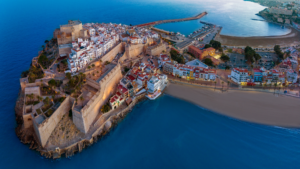
  • Peñíscola – impressive castle and peaceful beaches
  • Chelva – hike to the remains of the Roman aqueduct Peña Cortada


Brush Up On Some Valenciano

Everything to know about Valencia, Spain 5

That’s right – if you really want to unleash your inner Valencian, it is time to learn some Valenciano. 

The Valencian language is linguistically influenced by French, Spanish and Catalan, with more than 30% of habitants in the Valencian region speaking Valenciano natively. The language is also widely integrated into the public school system. Although Valenciano is more present in small neighborhoods, the city center has many advertisements and street signs written in Valenciano.

Here are a few phrases to get you started: 

  • Bon dia  – Good morning
  • Adéu – Goodbye
  • Com va tot? – How’s everything going?
  • Bé, i vosté? – Fine, and you? 
  • Moltes gràcies – Thank you very much
  • De res – You’re welcome


You’ll Need a Great Picnic Blanket

Valencia is practically overflowing with gorgeous green spaces to enjoy. Turia Park is one of the most spectacular, with more than 7 kilometers of green space for walking, running, or relaxing. On any given afternoon, you can find exercise classes, meetup groups, families, university students, and even birthday parties all bringing the park to life. 

Turia park was created from the riverbed of the old Turia River. This river previously ran through the city before it was redirected to prevent flooding. Today, many locals still refer to the park as “The River” or “El Río”, honoring its charming history. 

If you are drawn to plants and foliage, Jardín Botánico should be at the top of your list. This garden was established in 16th century as a center for botanic study and research. Now, Jardín Botánico is home to thousands of exotic species of trees and plants from five different continents. The garden is open to the public and is a splendid place to get lost amongst thriving greenery.


Photo Credits:

  • All photos used through the Canva Free Media License

Imagine this…

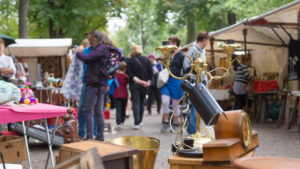
Lille, a serene city nestled in northern France, suddenly transforms into a frenzy of exhilaration and delightful chaos. Crowds swarm the streets, drawn by the allure of unbeatable deals and charming trinkets. People rush to bargain with vendors while the aroma of traditional Flemish food drifts through the air. Music, smiles and laughter are all around as people enjoy an unparalleled, one-of-a-kind cultural experience. 

The Largest Flea Market in Europe

This paints the picture of La Braderie de Lille, the largest flea market in all of Europe. La Braderie de Lille takes place every year during the first weekend of September and features more than 8,000 vendors selling clothes, books, antiques and more. The renowned event welcomes roughly 2 million visitors, and has grown in recent years to include concerts, rides, food stands and even a half-marathon!

You certainly don’t want to miss the 2023 market, which is scheduled for September 2nd and 3rd. La Braderie de Lille is an exceptional opportunity to delve into Lille’s traditions while partaking in unique festivities with friends and colivers.


The History of La Braderie de Lille

La Braderie de Lille 10

The roots of La Braderie de Lille can be traced back to the 12th century, stemming from Flemish fairs in the Middle Ages. The origin of the market is specifically linked to a secondhand fair that took place in the year 1127. The event repeated annually, gaining more and more popularity each year. Eventually, the market offered the opportunity for housekeepers and servants to sell their masters’ old clothes and possessions. This skyrocketed its popularity, as it became a way for the lower class to supplement their income. 

Throughout its history, the Braderie underwent several transformations, evolving both in its concept and presentation. Today, it is one of the largest gatherings in all of France. Its reputation is known far beyond France’s borders, and each year the market entertains both locals and visitors from all around the world. Steeped in tradition yet embracing modernity, La Braderie de Lille has earned its place as a cherished event that showcases the culture of Lille to the world.


Mussels & Fries

La Braderie de Lille 8

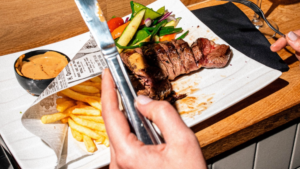
Central to La Braderie is the iconic dish of moules-frites, or mussels and fries. While the dish’s exact origins remain unclear, one theory suggests that repeated poultry epidemics led to a rise in popularity of mussels as a traditional food. Now, the menu at La Braderie is dominated by mussels and other traditional Flemish dishes, which always pair well with a refreshing beer. As part of the festivities, local restaurants take part in a unique challenge by piling emptied mussel shells outside their entrances. The restaurant that manages to build the tallest shell heap earns the distinction of being the festival’s top restaurant.


The Half-Marathon

The Braderie half-marathon kicks off the festivities and sets the stage for the whole weekend. As the sun rises on Saturday morning, tens of thousands of eager runners prepare to race. There are 3 different options – 5, 10 or 21 kilometer races – allowing runners of various levels to participate. The half-marathon started back in the 1980s and now attracts many international participants. It has become an essential part of the Braderie itinerary. After crossing the finish line, participants usually head straight for a plate of mussels and fries. If you’re interested in participating, you can secure your own spot by registering for your preferred race on the official site.


Preparing for La Braderie

Get your accommodation

  • Reserve accommodation in advance. As there are many people traveling to Lille for La Braderie, it is wise to book something as soon as possible. If hotels are filling up, consider staying in a nearby city or even taking a train from Paris or Brussels. Of course, if you are living with us at Urban Campus Saint So’, Lille Coliving, you’ve got nothing to worry about.

Use the official map

  • You’ll want to get a hold of the official Braderie map, typically released a few weeks before the event. This map is a valuable resource with a layout of the market vendors, helping you pinpoint exactly which areas you want to visit.

The earlier, the better

  • Just like any typical garage sale or fair, the first day at La Braderie is your best chance for top-notch deals. The selling kicks off around 8am on Saturday, but rumor has it that Friday evening might be the best time to secure quality bargains.

Prepare to walk

  • Opt for your most comfortable walking shoes and leave your car, bike or scooter at home. The flea market spans an expansive area, with around 100 km of stands scattered throughout Lille. Be ready to walk!

Bring cash and be aware of pickpockets

  • For smoother transactions with vendors, it’s advisable to carry cash. However, in bustling crowds, be vigilant about pickpockets and keep your valuables close to your body. 

La Braderie de Lille stands as an essential experience for lovers of culture, adventure, and of course secondhand shopping. There is something for everyone to enjoy, whether it be quality live music or time spent eating delicious food. So, as this year’s Braderie approaches, only one question remains: will we see you there? 


Photo Credits: 

  • All photos used through Canva Free Media License
Welcome to La Maillerie, a hidden gem in the peaceful Villeneuve-d’Ascq region of Lille. This blossoming area is the location of our new Urban Campus coliving residence, opening in 2024! La Maillerie is a historic district that has been embracing a fresh vision for the future. The area is growing quickly with increasing job opportunities, green spaces and a tight-knit sense of community. It’s the ideal place for those seeking tranquility away from the city rush, yet still desiring quick access to Lille’s urban delights. Come with us and get to know La Maillerie in Villeneuve-d’Ascq!


Growing Opportunities in La Maillerie 

Get to know La Maillerie in Villeneuve-d'Ascq 4

The Villeneuve d’Ascq region is a prominent economic center within Hauts-de-France, with a substantial presence of nearly 2,500 companies. It also serves as the headquarters for renowned international companies like Bonduelle and Decathlon. Within the area, La Maillerie is a developing industrial hub with close proximity to the head offices of major corporations like Auchan, Bonduelle, and Leroy Merlin. It is an exceptional place for fostering connections with dynamic professionals and expanding your network

Moreover, you can find universities, laboratories and specialized schools with a focus on architecture, chemistry, commerce and IT. La Maillerie is also the home to esteemed EDEHC Business School Campus, drawing hard-working business students to the area. With such a plethora of opportunities and resources, La Maillerie has become an ideal setting for professional growth and advancement.


Nature Galore

Get to know La Maillerie in Villeneuve-d'Ascq 6

The Villeneuve-d’Ascq region is a dream for nature enthusiasts, with an abundance of outdoor spaces to explore. The region has 6 lakes, a network of cycling paths, and more than 200 hectares of green space. The renowned Parc du Héron, a vast nature reserve, stands out as a must-visit destination. The park has an impressive array of 220 bird species, plus an expansive lake with wildlife like turtles and fish. You can stroll on the long walking paths or have picnic in the ample green space. If you’re feeling brave, try hiking up the Marchenelles hill – a 40 meter hill surrounded by more than 120,000 trees. Whether it’s birdwatching, picnicking, or a peaceful walk, La Maillerie has quick access to an abundance of natural wonders to explore and cherish.


Explore the Cultural Attractions

Get to know La Maillerie in Villeneuve-d'Ascq 3

La Maillerie has a rich history with lots of cultural heritage to uncover. Whether your interests lie in art, sports, or history, you’ll find something captivating to discover. The LaM Museum of Modern Art is a prominent attraction, revered as a leading museum of modern art in Northern Europe since its establishment in 1983. The museum is built within a spacious park and regularly hosts open-air events. The LaM has collections that delve into modern, contemporary, and “raw” art, emphasizing unique artistic intersections that will challenge your creative eye.

If you’re a sports enthusiast, you are in for a treat with the renowned Stade Pierre Mauroy stadium. The stadium has a seating capacity of 50,000 and is a frequent venue of concerts and sporting events. It is the official stadium of the Le Losc regional soccer team and will also be hosting various events during the much-awaited Olympic Games in July 2024. The stadium’s versatility is remarkable, with five distinct configurations that can be changed in just 24 hours. It is also known to attract big names in the music industry, like Pink Floyd’s Roger Waters in May 2023.


Eat, Drink & Take it Easy 

La Maillerie offers enticing options for dining and exciting weekend activities. Perhaps the most notable is Les Halles Biltoki, an enormous food market in the heart of town and conveniently close to our future coliving space. Les Halles Biltoki is a popular gathering spot for after-work drinks, happy hours, and leisurely brunches. The market features 25 independent food traders housed in a modern and spacious building, plus an inviting outdoor terrace. With such a diverse range of food vendors and places to relax, you can come to Les Halles in La Maillerie many times and always try something new.  

For beer drinkers, Brique House is the place for you. This beer house has a giant 800m2 taproom with an extensive selection of brews and a menu full of comfort food. They also have two beautiful terraces and a large rooftop, where you can drink and enjoy the sunshine in the summer. Brique House is know for crisp interior design paired with a laid-back atmosphere, and they hold special events in their spaces every week. We highly recommend grabbing a beer here and taking it easy with friends, family, or future colivers.


Photo Credits: 

  • Cover Photo: La Maillerie Instagram Account – see original post
  • Photo 1: Halles de La Maillerie Instagram Account – see original post
  • Photo 2: Canva Free Media License

  • Photo 3: Canva Free Media License
  • Photo 4: La Maillerie Instagram Account – see original post

Madrid is known as a bustling metropolis with a rich mixture of cultures, languages and opportunities. With a city so vast and diverse, the challenge of finding your social niche can be daunting. It is normal to feel a little lost amidst the hustle, but don’t worry, we’ve got your back! Allow us to guide you through the city and show you the best ways to meet people in Madrid.


Language Exchanges 

The Best Ways to Meet People in Madrid 5

Language exchanges are a fantastic opportunity to meet people in Madrid. Not only can you practice the language of your choice, but you can connect with both international and local attendees. These exchanges happen at various bars throughout the city with different tables dedicated to languages like Spanish, English, French, and German. The beauty of language exchanges is their relaxed environment. You can engage in conversations, enjoy drinks, and forge new friendships without any pressure or judgment. Don’t be intimidated if your language skills aren’t the best – the true focus of these events is meeting new people and having a good time. 

Popular Language Exchanges in Madrid: 


Download the Meetup App 

The Best Ways to Meet People in Madrid

The Meetup app is a true gem when it comes to discovering the pulse of Madrid. With a comprehensive weekly calendar, Meetup provides a treasure trove of opportunities for making new friends. Events on the app range from sports games and yoga classes to bar meet-ups and art exhibitions. Meetup also showcases various city-wide organizations that cater to specific interests groups such as “hiking enthusiasts” or “digital nomads”. Attending just a few of these activities can help you meet like-minded people who share your interests and passions. What’s more, these events are known for their warm and welcoming atmosphere, making it effortless to socialize.


Hit the Bars

The Best Ways to Meet People in Madrid 7

We all know that Spanish culture and bar culture go hand in hand. Spanish bars are more than just places to enjoy a good beverage; they are also hubs for socializing and making new connections. We understand that stepping into a bar alone can feel a bit uncomfortable. Luckily in Madrid, there are many bars that host events or feature live music performances, which makes it easier to strike up conversation with the people around you. Whether you’re looking to hit-it-off with the locals or are seeking a bar with more international flare, we’ve got recommendations. 

  • Café Berlin – a historic bar with live music performances in various genres
  • Salmon Guru – known for their experimental cocktail menu and creative interior design
  • Ojala – an indoor beach bar, complete with sand and a tropical drink menu 
  • O’Connell St or Dubliners – two of the most popular Irish pubs in the city, practically next door to each other


Take a Weekend Trip

Pack your bags! Did you know there are groups in Madrid that organize awesome weekend trips? You can visit cool spots outside the city like peaceful nature trails, or even go to charming cities like Segovia and Toledo. These excursions are quick, affordable, and are an incredible way to bond with new people. As many seasoned travelers will tell you, there is no better way to build meaningful friendships than through group travel. Plus, these excursions have experienced guides who help facilitate a familial, social environment amongst trip participants. Recruit some fellow colivers and consider getting out of the city for a day or two.  


Explore Different Neighborhoods

If you’re on the hunt to expand your circle of friends, don’t just stick to one part of the city! Madrid is an enormous place with so many neighborhoods to explore. It can be tempting to revisit the same areas over and over, but venturing beyond what is familiar will help you discover the true essence of Madrid. Plus, the more neighborhoods you explore, the more opportunities you have to meet people from all over the city. Retiro, La Latina, and Chueca are great neighborhoods for after-work drinks and weekend activities. If you are interested in adventuring beyond the city center, try Chamartín. Each neighborhood has its own specific vibe and unique attractions that heighten the fun of exploring. 


Photo Credits: 

  • Photo 3-5: Canva Free Media License

Get ready to fight for your life.

With the approach of August comes one of the most epic battles in the modern world. More than 20,000 people will travel to Valencia for the chance to scream, fight and participate in war-like combat. But don’t worry, this isn’t a typical “war” and you certainly won’t need any physical fighting skills. In fact, you’ll only need one thing. Tomatoes.

A Guide to La Tomatina in Buñol, Valencia 6

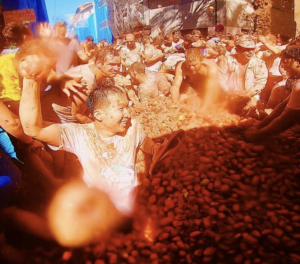
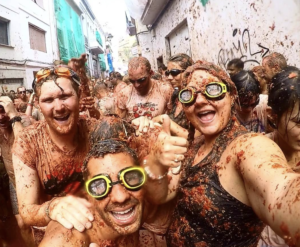
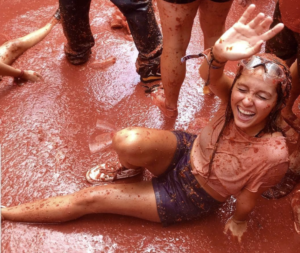
La Tomatina is the largest organized food fight in the world. It takes place in the small Valencian town of Buñol, where people flood the streets for the chance to hurl tomatoes at each other. The annual festival uses an estimated 150 tons of overripe or unwanted tomatoes saved especially for the occasion.

To commence the fighting, enormous trucks drive through the streets and dump tomatoes from their truckbeds. Participants then lunge into the tomato piles and start the free-for-all battle. The food fighting lasts for exactly one hour, and by the end, Buñol’s streets are deep red rivers of smashed tomato.

You might be wondering…how on earth did a food fighting festival come to be?


The History of La Tomatina

A Guide to La Tomatina in Buñol, Valencia 8

It all started in 1945, when a group of local teenagers in Buñol wanted to participate in a traditional Giants and Big Heads parade. For reasons unknown, a small dispute broke out between the youth and other parade participants. Amidst the skirmish, a nearby vegetable stand collapsed and spilled produce onto the street. The feuding parties quickly leapt for the tomatoes and broke into a full-on food fight. They teamed up and pelted each other until the local police eventually put an end to the battle.

The following year, the same group of youngsters were eager to recreate the scene. They brought tomatoes from home and picked their own fight at the parade. This second tomato fight marked history, and the townspeople of Buñol began to embrace the unusual tradition. The government responded by banning tomato fighting for several years, yet demand for the new custom prevailed. The ban was lifted in 1959 and by 1980 the government had taken charge of organizing the festivities. Now, La Tomatina brings more than 20,000 people to Buñol every year and is one of the most famous celebrations in all of Spain.


So, you want to go? Here’s a guide to La Tomatina in Buñol, Valencia

A Guide to La Tomatina in Buñol, Valencia 10

Consider bringing goggles and earplugs

  • Tomatoes will be flying everywhere. Any exposed part of your body will get splashed, so if you have sensitive eyes or ears, bring a form of protection.

Wear clothes you will NEVER use again 

  • There is no salvaging tomato-soaked clothes. Be prepared to part with whatever you wear, and bring a fresh change of clothes.

Bring water shoes

  • We weren’t kidding when we said Buñol will become a tomato river. Your shoes will not survive the battle, so we suggest getting a cheap pair of water shoes.

Rent a locker

  • It is highly recommended to rent a locker at La Tomatina. Anything you bring into the food fight will be soaked and destroyed. Leave all of your valuables, including your phone, in a locker.

Bring cash

  • Cash is the only thing you will want to bring into the fight. Put it inside of a plastic bag and store it somewhere safe on your body. The whole town will be shut down aside from a few outdoor food and drink stands, so cash is essential.

Don’t forget to hydrate

  • Although there will be water for sale at the festival, it can be hard to maneuver through the giant crowds. Bring your own water and stay hydrated!

La Tomatina always takes place on the last Wednesday in August, and this year’s festival will be celebrated on August 30th. There is a small 10 euro fee to enter. Buñol is an easy 1 hour train or 30 minute drive from Valencia’s city center. If you don’t want to stress about the logistics, you can sign up with a tour group that organizes transportation and item storage. 

So, will we see you and your fellow colivers at La Tomatina this year? 


Photo Credits: 

  • Cover Photo: Canva Free Media License
  • Photo 1: La Tomatina Festival Instagram – see original post
  • Photo 2: La Tomatina Festival Instagram – see original post
  • Photo 3: Canva Free Media License
  • Photo 4: La Tomatina Festival Instagram – see original post

July 20th, 2023

  • Casilda Mulliez & Urbanitae discuss the growth of coliving while she reflects on Urban Campus’ recent expansion and future plans.

The interview discusses the growing popularity of coliving as a housing trend in Spain. Coliving involves residents sharing common spaces and living in a community, providing an alternative to traditional residential rentals. Urban Campus is dedicated to creating and managing coliving buildings, emerging in 2016 to address the changing needs of younger generations who prioritize digital services and community living.


Urban Campus in Valencia

Urban Campus manages several coliving buildings in European cities, including Lille, France and multiple locations in Madrid. The company recently launched its first greenfield coliving building in Valencia, Spain with support from White Investing and Batipart. This building features 41 studios with shared amenities such as a gym, coworking spaces, and a rooftop terrace. The coliving model is targeted at young professionals, and Urban Campus offers a variety of inclusive services, creating a comfortable and welcoming community for long-term stays.


The Concept of Coliving

The coliving concept aims to add value to rental housing by offering fully furnished, turnkey solutions with quality standards and shared spaces. For investors, coliving provides a stable return similar to residential assets, but with an additional market premium that makes it appealing. The coliving market is still relatively new in Spain and Europe, with various players and different concepts being explored.

Urban Campus plans to expand its presence in Spain by considering projects in Barcelona and Malaga, while also exploring opportunities in other cities like Palma de Mallorca and Bilbao. The profile of colivers is typically young professionals between the ages of 25 and 40, both Spanish and international, who prefer the coliving option for its community-focused living experience.

Overall, coliving it is still a relatively small market compared to traditional residential rentals in Spain and Europe. However, it is seen as a positive development in the real estate industry, offering an improved rental experience and attracting investors due to its stable returns and market appeal. 

Read the full interview here.

Our mission at Urban Campus goes far beyond the creation of coliving spaces. We are intent on building engaged, supportive communities where people can grow together. Urban Campus coliving spaces aren’t only residences, but also hubs of collaboration, networking and ideation for young professionals from all over the world. Our spaces are brimming with digital nomads, freelancers and entrepreneurs eager to embrace each other’s projects and interests. 

Urban Campus Cuatro Caminos, Madrid Coliving opened it’s doors in October 2022 with 150m2 of contemporarily-designed common space. The common spaces include a coworking area, patio, gym, event space, and kitchen. With so much space to enjoy, there is a natural sense of community and connection amongst colivers. The environment at the Cuatro Caminos coliving is close-knit and familial, with many Urban Campus events and organic plans happening every week. Curious to know more about the people living there? Keep reading to meet a few!


Meet Delia – Entrepreneur & Travel Enthusiast

Meet CC Community

Delia is a hard-working entrepreneur who runs her own SEO Marketing Business. Originally from Spain, she moved into our Cuatro Caminos coliving space right after it’s opening in October 2022. Delia was drawn to Urban Campus because she was looking for a community of like-minded entrepreneurs. Since she is a successful business owner, she wanted to be surrounded by ambitious people with their own goals and passions. She appreciates how among the mixture of business owners, freelancers and corporate workers in Cuatro Caminos, everyone shares a similar determined mindset.

Meet CC Community 1

The story of Delia’s entrepreneurial journey is inspiring. After working for many years in corporate marketing, she found herself at a cross-roads during the COVID-19 pandemic. With no job and no clear direction, she couldn’t help but feel pulled to create something of her own. She had always craved the autonomy of an entrepreneurial lifestyle, so she took a leap and started her own Rank&Rent business. Rank&Rent involves creating niche websites, ranking them #1 on google, and then renting them to local business owners. Now in it’s third year, Delia’s business is thriving and she is enjoying her lifestyle as a digital nomad. With all of her expertise, she is preparing to start a mentorship program that will help others achieve the same success and financial freedom through Rank&Rent SEO Marketing.

Beyond SEO Marketing, Delia has an affinity for travel. She has lived in different places all over the world, including 1 year in Switzerland and 2 years in Australia. She particularly loved her experience in Australia, spending time in both Sydney and on an island in the Great Barrier Reef. Being connected to the international community is important to Delia, and Urban Campus has been the perfect place to continue meeting people of all different backgrounds and nationalities.


Meet Pilar – Business Coach & Creative

Meet CC Community 2

Pilar grew up in Chile and worked as a psychologist before starting her own business. After many years spent in the psychology field, she ventured to Silicon Valley in the United States to study business, technology, and innovation. She immersed herself in the famously fast-paced work culture, and after progressing in her studies, felt inspired to explore business coaching. She wanted to help businesses improve their daily operations and work culture. This path also presented a unique opportunity for her to synthesize her background in psychology and her studies in innovation. She began coaching in San Francisco and never looked back. Now, she runs her own company coaching businesses and leaders from all over the world.

Meet CC Community 4

Pilar came to Madrid last year and was inspired to join Urban Campus so she could meet new people and connect with other business owners. Similar to Delia, she was eager to find a community of like-minded entrepreneurs. Urban Campus provided the collaborative environment Pilar was looking for, which helped spark her latest professional project. She is currently collaborating with another coliver to design a collection of physical intuition journals. These journals are focused on helping individuals navigate personal and business-related topics. Several themes include how to start your own business, navigating teamwork, and improving your personal relationships.

As a successful business owner, Pilar now has flexibility in her daily schedule to invest in her other passions. This includes playing the guitar, singing, and creating music, all things she is excited to spend more time doing. Urban Campus has helped Pilar find meaningful friendship and community, which has simplified her move to Madrid. She reflects that it is fantastic to have community events and common spaces where you easily connect with people, as this creates an authentic sense of home and belonging.


Meet Sofi – Business Owner & Journalist

Meet the Colivers of Cuatro Caminos 1

Sofi is a powerhouse entrepreneur who runs her own Advertising Agency. She grew up in Argentina and has always had a knack for freelancing, spending years gaining experience in copywriting, photography and journalism. She came to Spain in 2019 with a vision to culminate her strengths and launch her own Advertising Agency. By February 2020 she had her first client, and now her business has grown to include clients from all over the world. 

Within her agency, Sofi focuses largely on projects in the areas of human rights and ecology. These subjects are personal interests of hers, and as her own boss, she appreciates the freedom to embrace these passions in her work. Sofi is a lover of anything creative and is always exploring new outlets. One of her favorite projects is a Creative Workbook called “Art & Writing” that she created to help people renew their energy and find creative release. She also expresses herself through poetry, and frequents museums and cultural events to continue learning about the world around her. 

Sofi moved to our Cuatro Caminos coliving in March 2023, where she lives with her partner in a shared apartment. She moved to Madrid after spending 3 years in Barcelona and appreciated how easy the Urban Campus application process was. It was important for Sofi to find other creative people in the city, and Urban Campus became both a home and creative network for her. She now participates in a creative ideation group where colivers meet and give feedback on each other’s professional projects. You can also frequently find her in the Cuatro Caminos gym, where she enjoys doing yoga and centering herself.

Check out her website, LinkedIN and Instagram!


On Saturday, July 8th 2023, À Punt Media featured the opening of our new coliving building in Ayora, Valencia. Community Manager Paz Lucero guided the crew through the building’s brand new common areas, which include a lounge, kitchen, gym, coworking space and rooftop terrace.

They also toured our different private studio options, exploring the amenities that come in our cozy, standard and premium studios. Our newly inaugurated colivers explained why they were drawn to Urban Campus and what they think about the coliving experience. As the first greenfield coliving project in the whole Valencian Community, we were thrilled to showcase our Ayora building and provide more insight on Urban Campus’ mission.

Summer is supposed to be a time of sweet release and relaxation, but we all know it doesn’t always look that way. Everyday stressors stay present regardless of the season, especially in today’s fast-paced world. Most of us spend the summer juggling work pressure and vacation logistics, all while trying to squeeze in as much “me-time” as possible. Then, in the blink of an eye, the sun wanes and we find ourselves at the start of fall once again. 

Despite the ever-present stressors of life, summer truly is the best time to slow down and reflect. It marks the halfway point of the calendar year, a prime time to check-in on yourself and realign your intentions. We want to encourage you to unwind this summer, even if you’re pressed for time. Here you can find our recommendations on the top 7 ways to de-stress this summer.


Travel to Natural Destinations

7 Ways to De-stress this Summer 8

Travel doesn’t always have to involve complex planning and expensive tickets. Sometimes a peaceful walk or day spent at the beach is all you need to decompress. There are many easy afternoon, one day or weekend trips that you can enjoy spontaneously with friends and colivers. To de-stress, we recommend forgoing city trips and instead embracing some local nature. Fresh air and scenic views are unmatched when it comes to putting your mind at ease.

  • For our Valencia colivers, check out the springwater pools and lush mountains of Montanejos. Montanejos is 45 minutes by car from Valencia city and is great for sunbathing, swimming, hiking and rafting. If you don’t have a car, the Valencia Language Exchange frequently organizes group trips via bus.
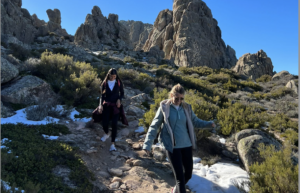
  • For our Madrid colivers, try the Hayedo de Montejo. Hayedo de Montejo is an expansive forest that makes up part of the European Beech Forests, which all together are declared a UNESCO World Hertiage Site. The forest has long walking paths underneath big beech trees, and is roughly 1 hour and 20 minutes from Madrid’s city center. Be sure to make a reservation before you go.
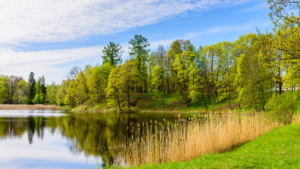
  • For our Lille colivers, we suggest the Parc Naturel de Scarpe Escaut. This natural park is a haven of greenery and walking paths. The park was shaped by the Scarpe and Escaut rivers and now has zones of wetland, forest and farming. The journey from Lille to Parc Naturel de Scarpe Escaut is one hour by train or 30 minutes by car.


Create a “Summer Vibes” Playlist

7 Ways to De-stress this Summer 9

Usually it’s the little moments that have the biggest impact on your day. Sometimes all it takes is a stellar cup of coffee or listening to your favorite song to flip your mood and alleviate stress. For this reason, we suggest romanticizing your daily routines with your own summer-inspired playlist. Whether you prefer calm beats or scream-your-heart-out bangers, having a soundtrack ready-to-go makes your everyday life sweeter. Activities like working out, eating breakfast and commuting to work all feel more exciting with summer tunes in the background. We asked the Urban Campus team for some summer song recommendations to help you start your playlist. 

Favorite Summer Hits: 


Wander at your local produce market

7 Ways to De-stress this Summer 10

Eating fresh produce in the summer just feels right. The sunshine has a way of making plump strawberries and scoops of juicy watermelon taste extra delicious. Plus, wandering through an open-air market is sure to soothe your stress. It’s therapeutic to loose yourself amongst the many vendors of colorful produce and blossoming flowers. Also, since many fruits thrive in summer seasonality, you’ll have the chance to explore different types of produce that aren’t available in the fall or winter. Keep your eyes peeled for something different to try – you never know what new favorite food you may uncover! 

Grab your Urban Campus colivers and head to the market nearest you: 


Take an Email Vacation

Trust us, we know – disconnecting is hard. Email and social media have become the foundations of our everyday communication, and shutting them off can feel impossible. However, it is crucial to periodically trade-in the buzz of notifications for true peace and quiet. Even just a few hours of notification detox can leave you feeling refreshed and recalibrated. You can set application time-limits within your phone, or create automated response emails if you’re ready for a longer break. We know everything feels urgent, but this is your reminder that it isn’t. Digital boundaries are key for de-stressing and maintaining a sustainable work-life balance.


Experiment with a Creative Hobby

If you are having a hard time kicking your stress, maybe it’s time to embrace your artistic side. Creative expression is a textbook strategy for stress relief. Art slows down time and encourages more introspection and intentionality. Most of us have strolled curiously through the displays of an art museum, but have you ever participated in the creation of something artistic? Whether you feel a creative passion stirring within you or just want to have some fun with friends, we’ve got some ideas.

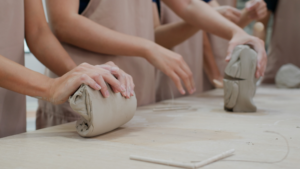
  • Take a pottery class
  • Try out a musical instrument
  • Go to a dance workshop
  • Learn a bit of mixology
  • Get an adult coloring book
  • Cook a new recipe


Make a Splash!

Ahh, water…the only true escape from the summer heat. Water is naturally comforting, and even just dipping your toes into the cool sea can help you feel less stressed. The sound of water is healing too – the crashing of waves, the current of a river, raindrops on a lake or even the soft splashes of a swimming pool. No matter where you go, taking a swim this summer is essential for your relaxation. Don’t be discouraged if you are landlocked or feel stuck in the city; there is always some type of water to be found. 

  • Valencia: Patacona, Malvarrossa, or Cabanyal beach should do the trick. If you’re looking for a change of scenery, go to the end of Turia park and picnic in front of the sparkling lake. You can even rent a paddle boat! 
  • Madrid: The Embalse de San Juan is known as “Madrid’s Beach.” It has over 14km of sand beach and is great for laying in the sun, swimming, or canoeing. You can go by bus, train or car – see your best transportation options here.
  • Lille: Head to Dunkerque, 1 hour by train from Lille, for a classic beach day. Dunkerque is famous for Kitesurf, long beaches and big sand dunes. Here you will have plenty of space to stroll along the shore or take a dive into the refreshing water.


Be Social!

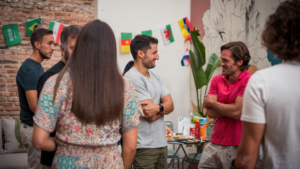
Time flies when you’re in good company. Human beings are a naturally social species, yet we often neglect our need for authentic social interaction. If you’re feeling like a ball of stress, ask yourself – when is the last time I spent quality time with friends? When is the last time I met someone new? Sometimes it is best to drop everything, get out of your house and be present with other people. Grab drinks with your friends, go to a language exchange, or call up that new coworker you’ve been meaning to go out with. You’ll be amazed how a little social interaction goes a long way.


Photo Credits:

  • All photos used through Canva Free Media License